
Should You Allow Subletting in Your Lease?

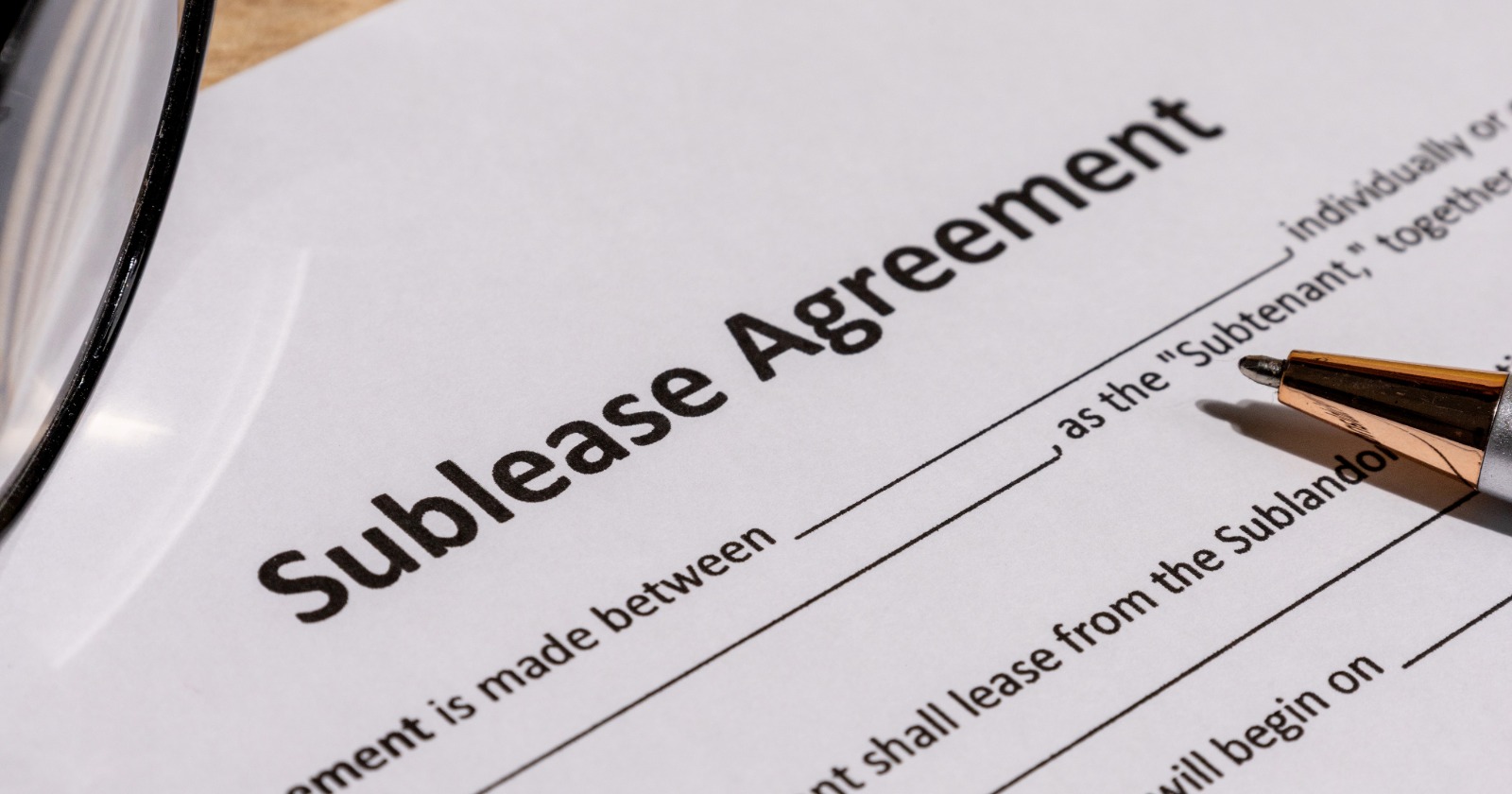
When you write a lease, the subletting clause forces a decision: do you let tenants bring in someone else to take over the unit, or do you forbid it? A lot of landlords reach for a flat ban because it feels like the safe choice, but an outright no can backfire in ways that are worse than a controlled yes. The better question is not whether to allow subletting at all, but how much control to keep over who ends up living in your property. For most landlords, the answer is a clause that permits subletting only with the landlord written approval, which keeps you in charge without painting you into a corner.
Sublet Versus Assignment: Know the Difference
First, a distinction that matters. In a sublet, the original tenant stays on the lease and rents the unit, or part of it, to a subtenant, remaining responsible to you for the rent and the property. In an assignment, the original tenant transfers the entire lease to someone else and steps out, with the new person taking their place. The difference controls who you can hold responsible. In a sublet your original tenant is still on the hook, which is generally safer for you. In an assignment your original tenant tries to walk away from the obligation entirely, which you usually want to control even more tightly. A good clause addresses both, because tenants often use the word "sublet" loosely to mean either one.
Why a Flat Ban Can Backfire
Forbidding subletting outright seems airtight, but it has two problems. First, life happens, and a tenant who takes a job in another city or has a family emergency may need someone to cover the rent rather than break the lease. A landlord who says an absolute no leaves that tenant with worse options, like abandoning the unit or simply moving someone in without telling you, which is exactly the uncontrolled situation a ban was supposed to prevent. Second, in some places a blanket prohibition is harder to enforce than landlords expect, and certain jurisdictions limit a landlord ability to unreasonably refuse a sublet. A flat ban can give you a false sense of security while a tenant quietly sublets anyway, leaving you with an occupant you never screened and no clean paper trail.
The Middle Path: Approval Required
The clause most landlords are better off with allows subletting only with the landlord prior written consent. This keeps the door open for legitimate situations while putting you firmly in control of who actually moves in. With an approval clause, the tenant must come to you before subletting, you get to screen the proposed subtenant the same way you screened the original tenant, and you can decline an unsuitable candidate. The original tenant typically stays responsible on the lease, so you keep your recourse if the subtenant fails to pay or causes damage. This is the arrangement that protects your interests without the brittleness of a total ban, because it channels subletting through you rather than driving it underground.
This middle path also handles the short-term rental question that catches many landlords off guard. A tenant who lists the unit on a vacation rental platform for weekends is, in practice, subletting to a stream of strangers you never screened, often in violation of the lease, local ordinances, or the building rules. An approval-required clause that defines subletting broadly enough to capture short-term arrangements gives you clear grounds to say no to that, rather than discovering a rotating cast of guests in a unit you thought housed one tenant. Spelling out that any occupancy by someone other than the named tenant needs your consent closes that gap before it opens.
What an Approval Clause Should Require
If you go this route, spell out the conditions. Require the tenant to request consent in writing before any sublet, give yourself the right to screen and approve the proposed subtenant, and state that the original tenant remains liable for the rent and for the subtenant conduct. Require a written sublease agreement between the tenant and subtenant, and consider requiring that it be provided to you. You can also reserve the right to charge a reasonable fee for processing the request where your state allows it. The point is to define the process clearly so a tenant knows exactly how to do it correctly and has no excuse for going around you. A proper sublease agreement between the parties, sitting under your approved clause, keeps everyone responsibilities clear.
Making the Decision
Decide based on your property and your tolerance for management. If you want maximum control and minimal turnover, an approval-required clause gives you almost all the protection of a ban while avoiding its downsides. If your situation genuinely calls for no subletting, such as a single-room rental in your own home, a clear prohibition can make sense, but understand the enforcement limits in your area before relying on it. Whichever you choose, write it explicitly into the lease rather than leaving it unsaid, because a lease that is silent on subletting invites exactly the gray-area dispute you want to avoid. Building a clear subletting clause into your lease agreement is how you keep control of who lives in your property.
Frequently Asked Questions
Should a landlord allow subletting?
For most landlords the best approach is to allow subletting only with written approval, rather than a flat ban or an open allowance. An approval clause keeps you in control of who moves in, lets you screen the subtenant, and usually keeps the original tenant responsible on the lease. A total ban can backfire by pushing tenants to sublet without telling you, leaving you with an occupant you never screened.
What is the difference between a sublet and an assignment?
In a sublet, the original tenant stays on the lease and rents the unit to a subtenant while remaining responsible to the landlord. In an assignment, the original tenant transfers the entire lease to someone else and steps out, with the new person taking their place. A sublet keeps your original tenant on the hook, which is generally safer for the landlord, so leases often treat the two differently.
Can a landlord refuse to allow a sublet?
Often yes, but it depends on the lease and the jurisdiction. A clause requiring landlord written consent lets you screen and decline an unsuitable subtenant. However, some places limit a landlord ability to unreasonably refuse a sublet, and a flat ban can be harder to enforce than expected. Check your local rules and write the approval process clearly so tenants know how to request consent properly.
Jill Stradley covers landlord-tenant law, lease agreements, and the fine print that renters and landlords skip until something goes wrong. Her goal is to make state-specific rental law readable for people who aren't lawyers and don't want to become one. She lives in a rental herself and considers that a professional asset.
View all posts →Create Your Lease Agreement
Need a lease agreement? Create one now for $7.99 - state-specific and professionally formatted.
Get Started - $7.99