
Renting Out a Basement Apartment: What the Lease Needs to Cover

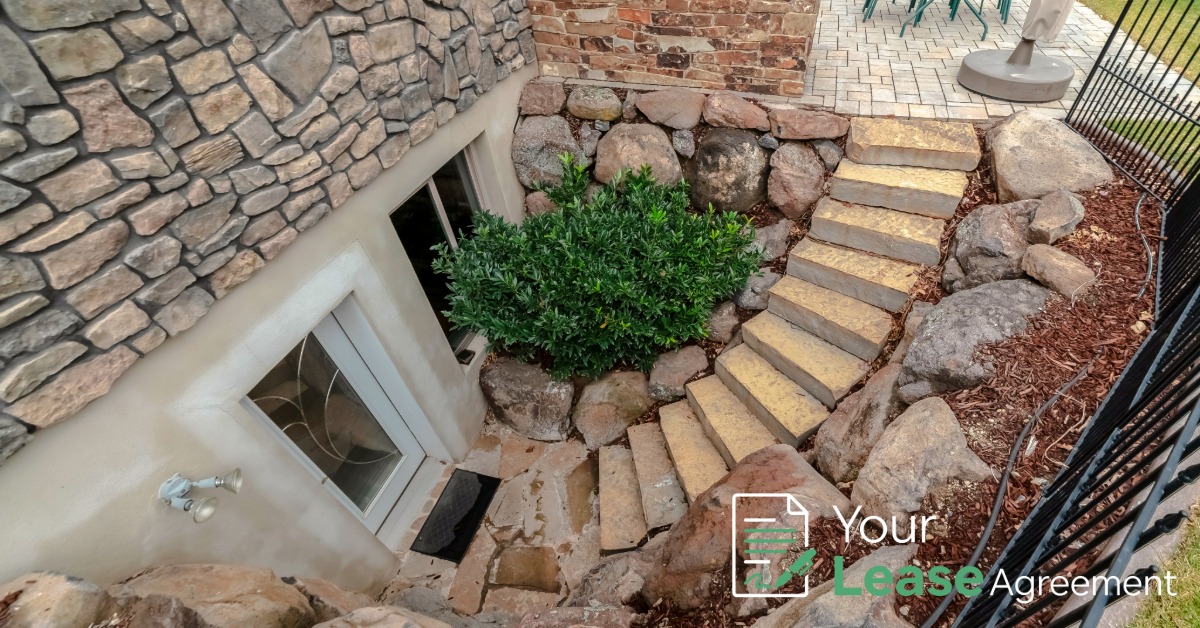
Renting out a basement apartment is one of the more practical ways to generate rental income from a property you already own. The unit is attached to your home, the setup costs are usually lower than a standalone rental, and the income can meaningfully offset a mortgage. It also comes with complications that a standard above-grade rental does not have, and most of those complications trace back to one thing: a lease that was not specific enough about the situation.
Here is what a basement apartment lease needs to cover that a generic template will miss.
Make Sure the Unit Is Legally Rentable First
Before drafting a lease, confirm the unit can legally be rented. This is not a lease question. It is a zoning and building code question, and it needs to be answered before anyone signs anything.
Most jurisdictions require a basement apartment to meet minimum ceiling height requirements, typically seven feet, have at least one egress window in each sleeping area that meets size and operability standards, have separate ventilation and heating, and pass a rental inspection. Some municipalities require a certificate of occupancy specifically for a basement rental unit. Others require a rental license. Operating an illegal basement apartment exposes the landlord to fines, forced vacancy orders, and in some states the inability to collect or keep rent if the unit is found to be non-compliant.
A lease on an illegal unit is not a defense. It is just documentation that the landlord knew they were renting a space. Get the unit inspected, get the required permits and certifications, and then sign the lease.
Shared Space: Define It Precisely
The single biggest source of conflict in basement apartment rentals is ambiguity about shared space. The tenant believes certain areas are available to them. The landlord believes otherwise. Neither put it in writing.
The lease needs to define exactly what space the tenant has exclusive use of and exactly what, if anything, is shared. Laundry rooms, utility rooms, garages, driveways, yards, and storage areas are all common points of conflict. If the tenant gets access to a parking spot, say which one. If the backyard is shared, say so. If the garage is off-limits entirely, say that too. Do not leave it to common sense or a verbal understanding. Those break down fast when the tenant's guests are parking in your spot or their boxes are filling your storage room.
The lease should also address shared building systems. In most basement apartments, the electrical panel, water heater, HVAC equipment, and other mechanical systems are in the same space the tenant occupies or has access to. State clearly what the tenant is and is not permitted to touch. Access by the landlord to maintain those systems needs to be addressed under the entry notice section, because you cannot give proper notice for a maintenance visit if the lease does not contemplate the situation.
Entry Notice and Privacy in an Owner-Occupied Building
This is where basement apartment rentals get genuinely complicated. When you live above the tenant, the temptation to handle things informally is real. A quick knock and walk-in to check on the water heater feels different when it is your own house. Legally, it is not different at all.
Your tenant has the same right to quiet enjoyment of their unit as any other residential tenant. The fact that you live upstairs does not change the entry notice requirements in your state. Most states require 24 to 48 hours advance written notice before entry for non-emergency maintenance, inspections, or showings. Arizona requires 48 hours. Florida requires 12 hours. California and Virginia require 24 hours. North Carolina has no mandatory statutory period but courts still apply a reasonableness standard.
The lease should state the entry notice requirement explicitly. It should also address access to shared mechanical systems separately, because you may legitimately need access to the utility room on short notice and that scenario should be defined in advance rather than creating a conflict when it comes up. A provision allowing immediate access to shared mechanical equipment in a non-emergency with a courtesy notification, separate from the formal entry notice requirement for the tenant's living space, is a reasonable and legally defensible structure.
Noise, Hours, and Shared Wall Reality
In a basement apartment, sound travels both ways. Your tenant hears everything happening above them. You hear everything happening below you, especially if the unit has hardwood floors overhead. This is not a dealbreaker but it needs to be addressed in the lease before it becomes a source of ongoing friction.
Quiet hours are the most practical tool. Define the window, typically something like 10 pm to 8 am on weeknights and midnight to 9 am on weekends, and state that both parties agree to keep noise at a reasonable level during those hours. This applies to you as much as to the tenant. A landlord who routinely vacuums at 7 am above a tenant's bedroom has no standing to complain about the tenant's television at 11 pm if the lease is silent on the topic.
The guest policy also matters more in a basement apartment than in a standalone rental. Regular overnight guests, frequent parties, or a tenant who effectively has multiple people living in the unit creates noise and common area use issues that compound quickly when you live in the same building. Define what constitutes a guest, how frequently guests can stay, and what the process is for adding a permanent occupant. A guest who is there five nights a week for three months is not a guest. They are an unauthorized tenant.
Utilities: Who Pays What and How
Utilities in a basement apartment are rarely clean. Most do not have separate meters for gas, water, or electric. If the basement unit shares utilities with the main dwelling, the lease needs to address that arrangement in specific terms.
The options are a flat utility inclusion in the rent, a percentage split, or separate metering where it's feasible. Whatever structure you choose, write it down precisely. "Tenant pays 30% of the monthly gas and electric bill, due within five days of the landlord providing the utility statement" is a specific, enforceable provision. "Utilities included" is a vague one that creates disputes the moment a tenant runs the heat at 78 degrees all winter.
Several states require landlords to disclose utility arrangements in the lease. Arizona, North Carolina, and others have specific disclosure requirements around shared utilities. Even where disclosure is not mandated by statute, courts in virtually every state have found that a landlord cannot retroactively charge a tenant for utilities that were not defined in the lease.
Separate Entrance and Common Area Maintenance
Most basement apartments have a separate exterior entrance, which is both a practical benefit and a maintenance responsibility that needs to be defined. Who is responsible for shoveling the walkway to the basement entrance in winter? Who maintains the exterior stairway if there is one? Who handles pest control for common areas?
These seem minor until someone slips on an unshoveled walkway in January and the question of whose responsibility it was becomes a liability question. Put it in the lease. Assign specific maintenance responsibilities clearly and do not rely on a general provision about the landlord maintaining common areas unless it actually specifies what common areas are and what maintenance looks like.
Pets and the Practical Reality of a Shared Building
Pet policies in a basement apartment carry more weight than in a standalone rental. A large dog in a basement unit affects the landlord directly, both in terms of noise and in terms of potential damage to a space that is part of the same structure as their living space. If pets are allowed, be specific about what kinds, what sizes, and what the pet deposit or non-refundable fee covers. Remember that service animals and emotional support animals are not pets under federal fair housing law and cannot be excluded regardless of your pet policy.
If pets are not allowed, say so explicitly in the lease. Three words. "No pets permitted." Without it, a tenant who moves in with a cat can argue the lease was silent on the subject.
Security Deposit and Move-In Documentation
Basement apartments tend to have more pre-existing quirks than above-grade units. Older water stains, minor moisture issues, concrete floor wear, older appliances. A thorough move-in condition checklist is especially important here because the baseline condition of a basement is harder to establish from memory alone, and the gap between "pre-existing stain" and "tenant-caused damage" is exactly what a documented checklist resolves.
The security deposit rules in your state apply regardless of property type. Check the cap, hold the deposit correctly, and return it with an itemized statement within the required deadline. The security deposit limit checker shows the maximum allowed in your state and the return deadline that applies after move-out.
What Happens When the Relationship Gets Complicated
Renting to someone who lives in the same building as you creates a relationship intensity that standalone rentals do not. You will see each other regularly. Small frictions become big ones faster. A tenant who is late on rent is not an abstract problem. They are your neighbor.
The lease is what keeps that relationship professional when it gets uncomfortable. A clearly defined late fee, a stated grace period, and a written process for addressing lease violations mean neither party has to rely on a difficult conversation to establish what is owed or what needs to change. The alternative is a landlord who feels awkward bringing up unpaid rent because they saw the tenant in the driveway that morning and let it slide, and then slides it again the next month, until the balance is three months deep and the relationship is already damaged.
Enforce what the lease says from the start. Not aggressively. Just consistently. Consistency is what keeps the professional relationship intact even when you are sharing a building.
Use a State-Specific Lease
A basement apartment is still a residential rental. The full suite of state-specific requirements applies: required disclosures, deposit rules, notice periods, habitability obligations, and any local rental licensing requirements. A generic template written for no state in particular will miss the disclosures your state requires and may include terms that are void under your state's landlord-tenant act.
A state-specific residential lease agreement gives you the legally compliant foundation. Add the basement-specific provisions, the shared space definitions, the utility arrangement, the noise and guest policies, and the entry notice language for shared mechanical systems on top of that foundation. The result is a lease that actually fits the situation instead of one that creates ambiguity exactly where you need clarity most.
The simplest way to protect both sides is to generate a state-specific lease agreement with the right clauses already in place.
Frequently Asked Questions
Can you legally rent out a basement apartment?
Only if it meets local zoning, building codes, and rental licensing requirements.
What makes a basement apartment legal to rent?
Typically ceiling height, egress windows, ventilation, and passing required inspections.
What should a basement apartment lease include?
Clear terms for shared spaces, utilities, entry notice, noise rules, and maintenance responsibilities.
Jill Stradley covers landlord-tenant law, lease agreements, and the fine print that renters and landlords skip until something goes wrong. Her goal is to make state-specific rental law readable for people who aren't lawyers and don't want to become one. She lives in a rental herself and considers that a professional asset.
View all posts →Create Your Lease Agreement
Need a lease agreement? Create one now for $7.99 - state-specific and professionally formatted.
Get Started - $7.99